
Scientific Classification
| Kingdom: Animalia |
| Phylum: Mollusca |
| Class: Gastropoda |
| Order: Neogastropoda |
| Family: Cancellariidae |
| Genus: Cancellaria |
| Species: Cancellaria conradiana Dall, 1890 |
Information
Geological Range
Paleogeographic Distribution
Stratigraphic Occurrences
| Bermont Formation |
| Caloosahatchee Formation |
| Nashua Formation |
| Waccamaw Formation |
| Tamiami Formation (Pinecrest Beds) |
| Tamiami Formation (Lower) |
Remarks
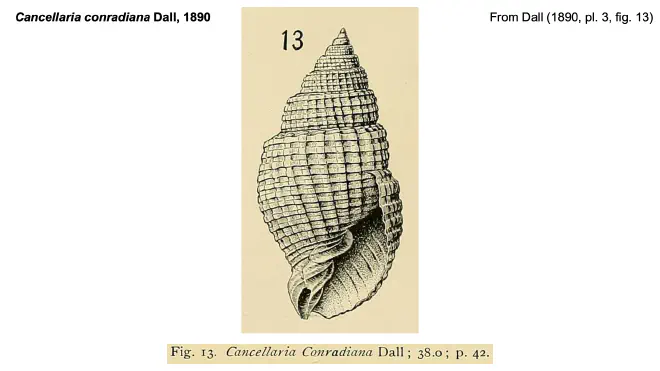
Synonymy: Cancellaria conradiana (Dall, 1890): p. 42, pl. 3, fig. 13.
Type Specimen: USNM 97354 (holotype), “Caloosahatchie River, near Fort Thompson, Florida” (Merrill, 1905, p. 124).
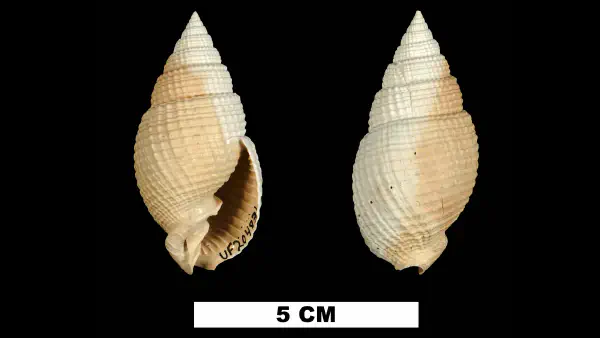
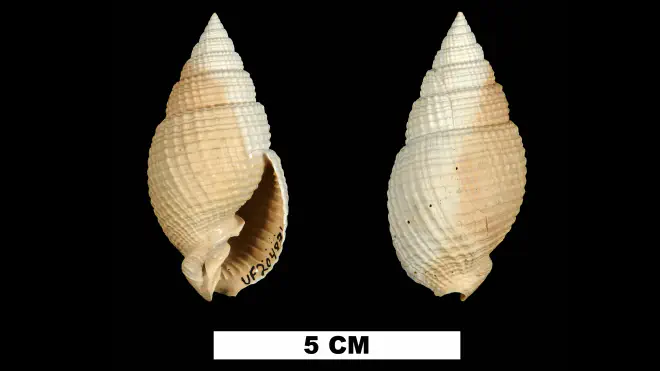
Original Description: From Dall (1890, p. 42): “This shell differs from the common and well-known C. reticulata Linne of the recent fauna of the Gulf of Mexico in the following particulars: It is much more slender: a specimen 38.0 mm. long has a maximum width of 19.0 mm. A specimen of C. reticulata 38.0 mm. long has a maximum width of 23.0 mm. In C. Conradiana the aperture is half the total length; in C. reticulata the aperture is five-eighths as long as the whole shell. The sculpture is essentially the same in both, and passes through the same range of variations. The suture is less marked in the fossil than in the recent shell. In both there is a slender elevated thread on the body, hardly visible at the aperture; there are also two much elevated, revolving plaits on the pillar and the anterior edge of the pillar is sharp and prominent. Except that on the body, these ridges have a tendency to become double-edged by the development of a secondary cord or ridge on their anterior faces. In the fossil, on the average, these folds are less thick and less double than in the recent shell, while the columella and its fasciole are narrower, weaker, and with a smaller umbilical chink. About forty specimens of the recent shell have been compared with a good series of the fossil, and so far not a single specimen of the recent form has been found among the fossils, though there is some variation as to stoutness, especially among the young shells. The longest specimen of the fossil is 62.0 mm. in length, which exceeds in size the largest C. reticulata I have seen. This species is without doubt a near connection of the recent form.”
Online Resources
References
Dall, W. D. 1890. Contributions to the Tertiary Fauna of Florida, with especial reference to the Miocene Silex-Beds of Tampa and the Pliocene beds of the Caloosahatchie River. Part I. Pulmonate, opisthobranchiate and orthodont gastropods. Transactions of the Wagner Free Institute of Science of Philadelphia, 3(1): 1-200, pls. 1-12. BHL
Media
Images
Page History
Page edited and reviewed by Jonathan R. Hendricks. Page first posted April 1, 2026.