Scientific Classification
| Kingdom: Animalia |
| Phylum: Mollusca |
| Class: Gastropoda |
| Order: Neogastropoda |
| Family: Fasciolariidae |
| Genus: Latirus |
| Species: Latirus maxwelli Pilsbry, 1939 |
Information
Geological Range
Paleogeographic Distribution
Stratigraphic Occurrences
| Bermont Formation [Uncommon] |
| Caloosahatchee Formation [Common] |
| Tamiami Formation (Pinecrest Beds) [Questionable/rare] |
Remarks
Common name: n/a
Synonymy:
Previously listed as Polygona maxwelli on the Neogene Atlas of Ancient Life.
Type specimen, locality, and stratum: n/a
Other voucher specimens: n/a
Descriptions:
Original Description (from Pilsbry, 1939, p. 86):
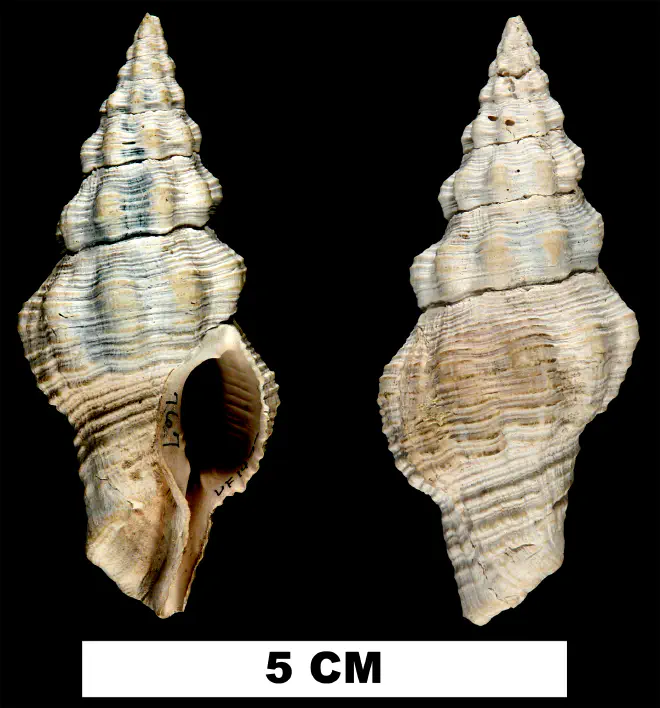
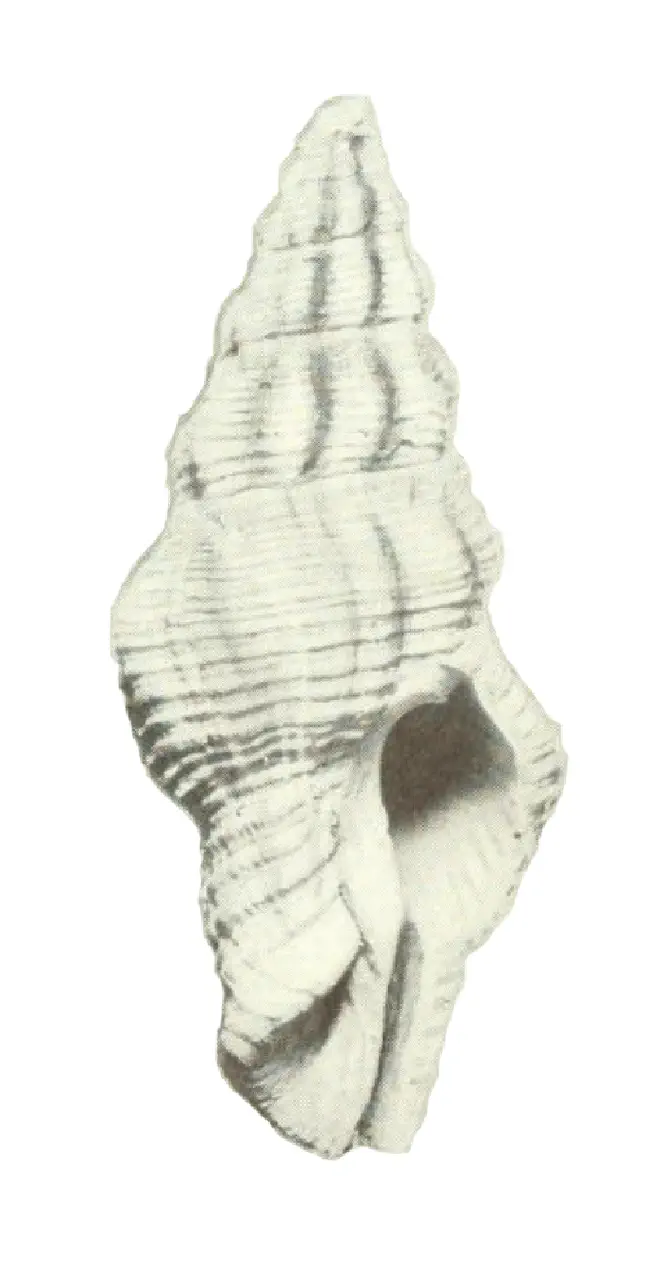
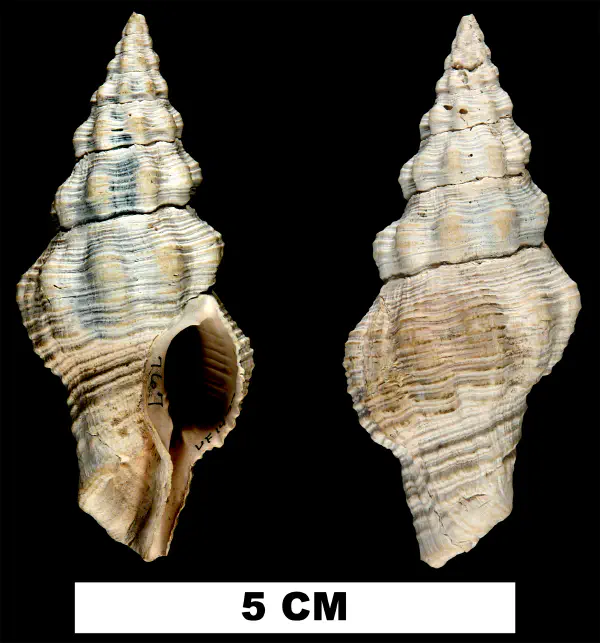
“The shell is solid, openly umbilicate, fusiform, the spire tapering regularly, the periphery (viewed in front) being a little above the middle of the length. Anteriorly it is somewhat cylindric and terminates bluntly, with a prominent, rounded siphonal fasciole around the deep umbilicus. Sculpture of moderately prominent axial folds (nearly nine on each whorl), weak near the suture and vanishing at the basal contraction of the last whorl. Over all a sharply developed sculpture of strong spiral cords alternating with threads except in the subsutural zone, where the cords are smaller and subequal. On the cylindroid anterior part there are about four somewhat larger cords with interstitial threads. The racquet-shaped aperture is strongly lirate within, the lirae about 12, arranged in pairs, the lower pair short, hardly entering. There is a strong ridge on the parietal wall near the posterior angle of aperture, and four columellar folds, the lowest one short, not entering.
Length 64 mm., diam. 27.3 mm.; length aperture 33.5 mm.; about 6.5 whorls remaining.
Ortona Locks, De Soto Co., Florida. Caloosahatchee Pliocene. Type 13534 ANSP., collected by Maxwell Smith, for whom it is named.
This beautiful fossil is quite unlike anything known from the Caloosahatchee beds. It is most nearly related to the living Latirus trochlearis and L. mcgintyi, but differs conspicuously by the profuse development of spiral sculpture and the weaker axial folds.”
To access this description in its original formatting through the Biodiversity Heritage Library, click here.
Measurements: n/a
Other remarks: n/a
References: n/a
Online resources:
Page history:
Some of the content on this page was originally published on the Neogene Atlas of Ancient Life on April 29, 2014. It was developed by Jonathan R. Hendricks and colleagues and migrated here in 2026.
This page was last modified on October 28, 2026 by Jonathan R. Hendricks.
Media
Images