Scientific Classification
| Kingdom: Animalia |
| Phylum: Mollusca |
| Class: Gastropoda |
| Order: Neogastropoda |
| Family: Cancellariidae |
| Genus: Massyla |
| Species: Massyla propevenusta (Mansfield, 1930) |
Information
Geological Range
Paleogeographic Distribution
Stratigraphic Occurrences
| Caloosahatchee Formation [Uncommon] |
| Tamiami Formation [Questionable/rare] |
| Tamiami Formation (Pinecrest Beds) [Common] |
Remarks
Common name: n/a
Synonymy: n/a
Type specimen, locality, and stratum: n/a
Other voucher specimens: n/a
Descriptions:
Original Description (from Mansfield, 1930, p. 47-48):
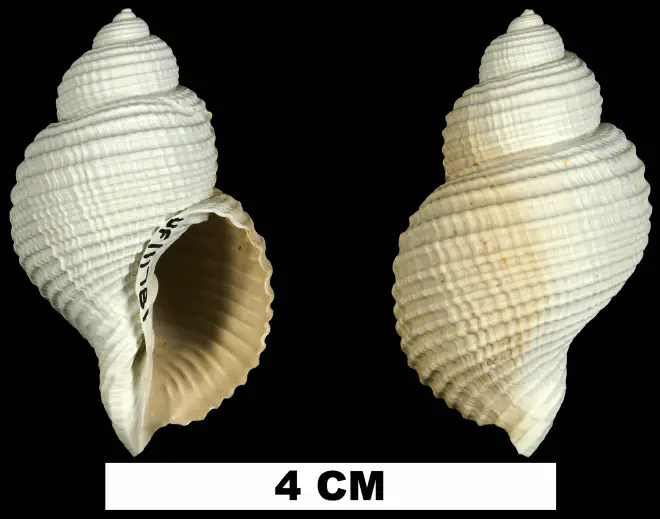
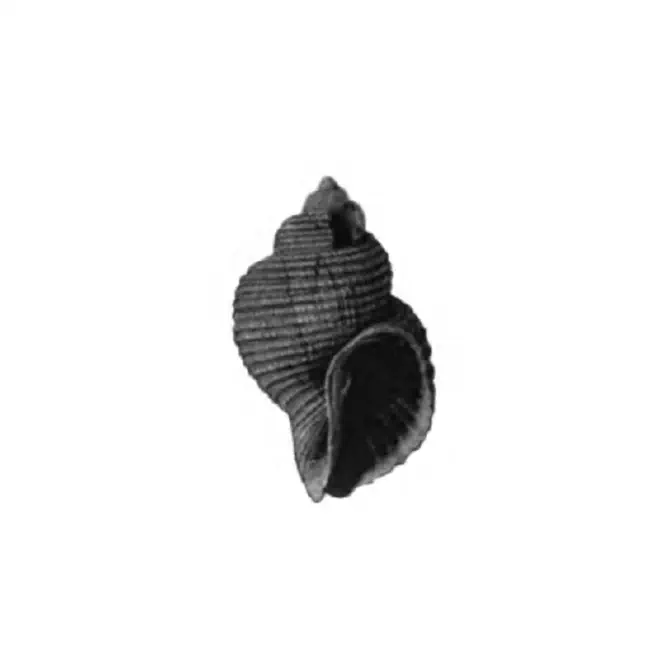
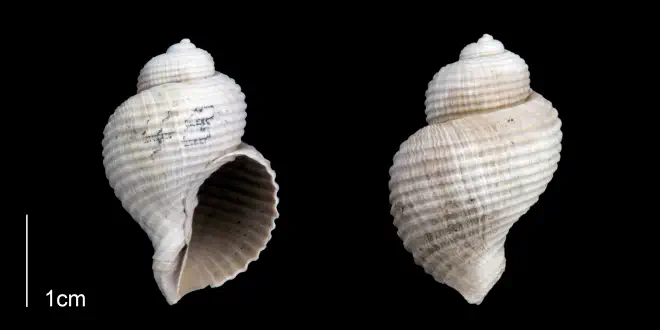
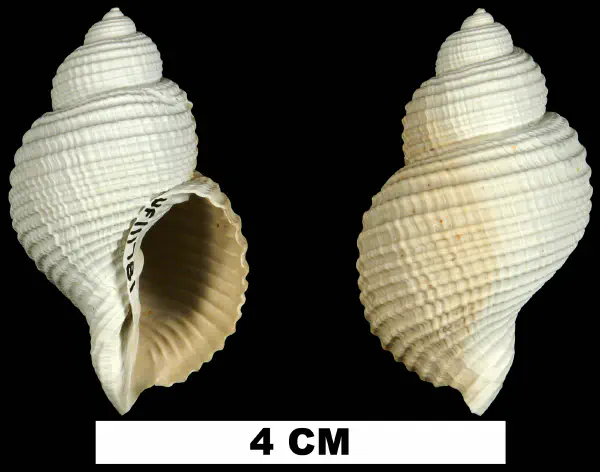
“Shell rather large, thin and fragile, turrited, and consists of 5 whorls. Nucleus smooth, flatly coiled. Following whorls rounded, strongly constricted at the profound, grooved suture. Spiral sculpture of equidistant, nearly flat-topped narrow bands (8 on the penultimate and 19 on the body whorl and canal), roughened by growth lines and poorly defined axials. Axial sculpture of weak ribs and closely crowded growth lines overrunning the surface and giving the shell a roughened but not a distinctly cancellate appearance. Aperture earshaped, slightly produced submedially. Outer lip thin, marked within with 15 carinate lirations, which are located opposite to the external spiral interspaces. Canal short, rather wide, and reflected. Posterior part of a parietal wall with a spiral, rounded ridge. Columellar lip marginally reflected and provided with 2 plications, anterior plication more oblique than posterior. A large perforation is behind the lower part of the columellar lip. Siphonal fasciole prominent, ornamented with 3 to 4 closely-set coarse spiral lines.
Type (U.S.N.M. Cat. No. 370006) measures: Altitude, 35 mm.; greatest diameter, 20 mm.; length of aperture, 22 mm.; greatest width, 10 mm.
The new species is closely allied to Cancellaria venusta Tuomey and Holmes, a species occurring both in the Waccamaw and Caloosahatchee Pliocene, but differs from this species in having a much larger shell, much more inflated and tabulated early spire whorls, and in lacking the coarse cancellate ornamentation possessed by the Pliocene species.
Occurrence: Upper Miocene: Florida, station 1/946, Harveys Creek, about half a mile above abandoned mill, Leon County, type locality (common); station 3671, Hosford, Liberty County (rare); borrow pit, near Jackson Bluff, Leon County (rare); station 8176, the “Deadens,” Washington County (rare).
Outside occurrence: North Carolina, Natural Well. South Carolina, Muldrow’s place, 5 miles southeast of Mayesville; Darlington.”
To access this description in its original formatting through Google Books, click here.
Measurements: n/a
Other remarks: n/a
References: n/a
Online resources:
Page history:
Some of the content on this page was originally published on the Neogene Atlas of Ancient Life on August 6, 2015. It was developed by Jonathan R. Hendricks and colleagues and migrated here in 2026.
This page was last modified on October 28, 2026 by Jonathan R. Hendricks.
Media
Images