Scientific Classification
| Kingdom: Animalia |
| Phylum: Mollusca |
| Class: Gastropoda |
| Order: Neogastropoda |
| Family: Muricidae |
| Genus: Murexiella |
| Species: Murexiella graceae (McGinty, 1940) |
Information
Geological Range
Paleogeographic Distribution
Stratigraphic Occurrences
| Bermont Formation [Uncommon] |
| Tamiami Formation (Pinecrest Beds) [Questionable/rare] |
Remarks
Common name: n/a
Synonymy:
Previously listed as Favartia graceae on the Neogene Atlas of Ancient Life.
Synonymous with Murexiella graceae.
Type specimen, locality, and stratum: n/a
Other voucher specimens: n/a
Descriptions:
Original Description (from McGinty, 1940, p. 84):
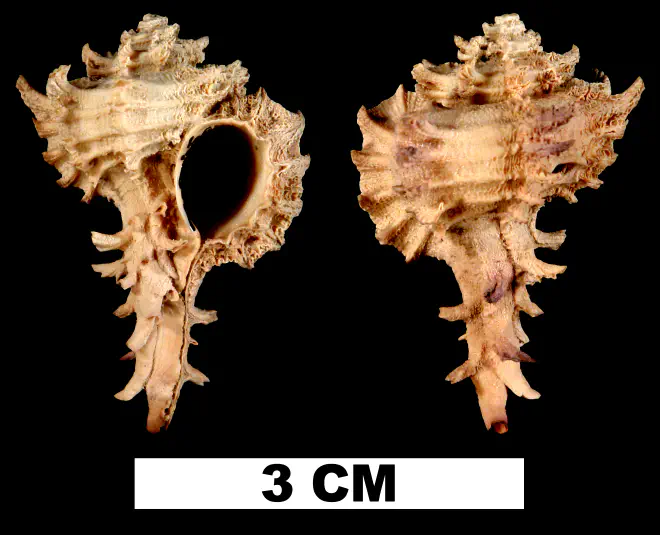
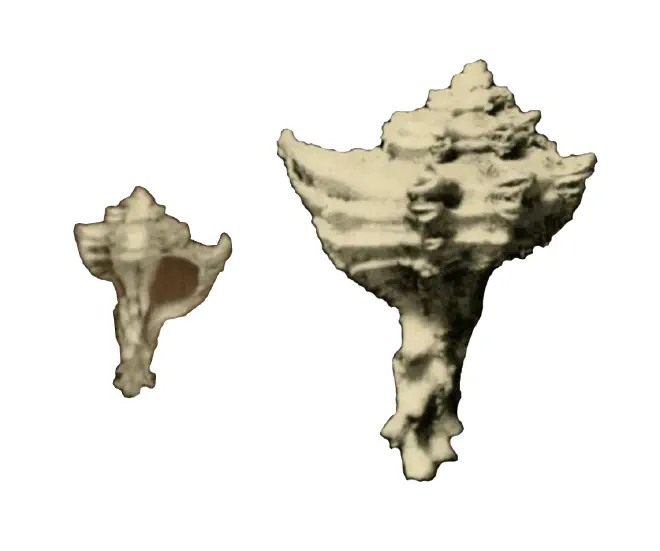
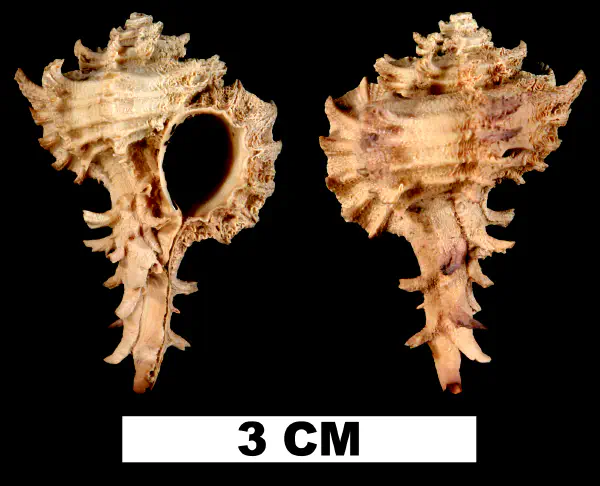
“Shell small, spire low, about 5 whorls (nucleus lost), suture appressed, indistinct; whorls shouldered; about 7 foliated ribs or varices; ribs spined, stronger and some recurved on the crown; double row of basal spines in the siphonal region; aperture truncate-oval; canal straight, longer than the aperture. Height: 22 mm., width 16.8 mm.
Locality: Belle Glade, Palm Beach County. Horizon: Pliocene (?) Holotype in McGinty collection.
This attractive little shell is named for Grace Pilsbry, the discoverer. T. graceae can be distinguished from T. macgintyi by the lower spire, shouldered whorls, having larger recurved foliated spines on the crown and the straight canal.”
To access this description in its original formatting through the Biodiversity Heritage Library, click here.
Measurements: n/a
Other remarks: n/a
References: n/a
Online resources: n/a
Page history:
Some of the content on this page was originally published on the Neogene Atlas of Ancient Life on July 23, 2014. It was developed by Jonathan R. Hendricks and colleagues and migrated here in 2026.
This page was last modified on October 28, 2026 by Jonathan R. Hendricks.
Media
Images