Scientific Classification
| Kingdom: Animalia |
| Phylum: Mollusca |
| Class: Gastropoda |
| Order: Neogastropoda |
| Family: Fasciolariidae |
| Genus: Polygona |
| Species: Polygona jucunda (McGinty, 1940) |
Information
Geological Range
Paleogeographic Distribution
Stratigraphic Occurrences
| Bermont Formation [Common] |
| Caloosahatchee Formation [Uncommon] |
Remarks
Common name: n/a
Synonymy: n/a
Type specimen, locality, and stratum: n/a
Other voucher specimens: n/a
Descriptions:
Original Description (from McGinty, 1940, p. 83):
“The delightful Latirus.
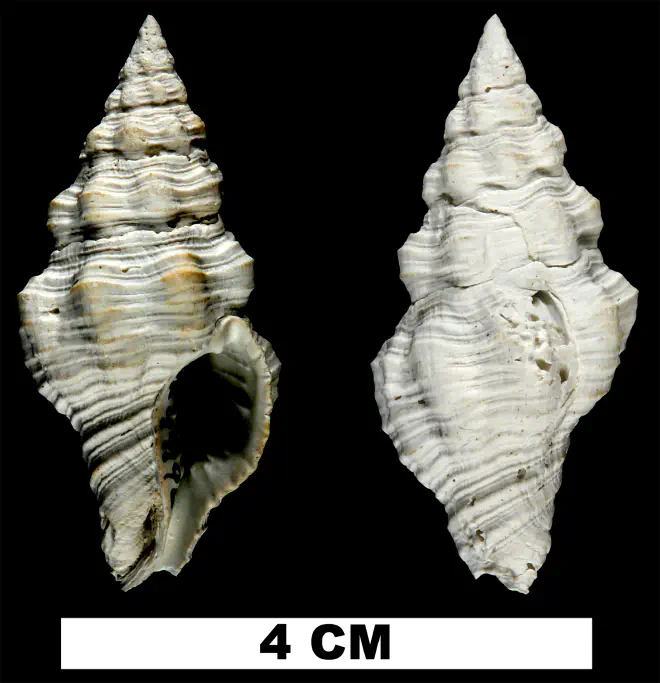
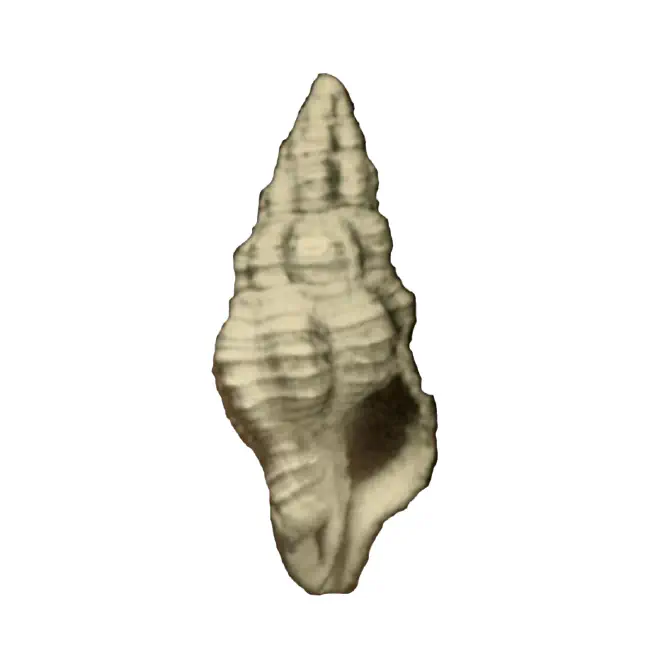
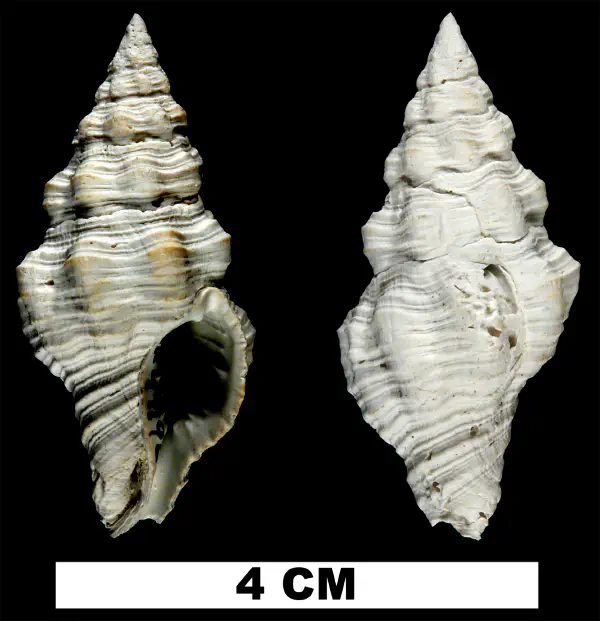
Shell fusiform, whorls 7 (apex lost), solid, with spire longer than the aperture, umbilicus slightly open; sculpture of rounded axial folds, about 7 in number on the last whorl, weak at suture and on the base; spiral threads on the shoulder and stronger cords below, the upper-most and those on the base alternating with smaller threads. Aperture elongate, lirae in the throat about 8. There are 4 columellar folds, about equal, and a strong ridge on the parietal wall near the posterior angle of the aperture. Height 43.8 mm., width 19 mm.
Locality: Belle Glade, Palm Beach County. Horizon: Pliocene (?) Holotype in McGinty collection.
L. jocundus can be most easily distinguished from L. maxwelli by the smaller size, the more slender shell, surface sculpture and the only slightly open umbilicus. The presence of two well developed cords on the earlier whorls suggests the recent L. mcgintyi.”
To access this description in its original formatting through the Biodiversity Heritage Library, click here.
Measurements: n/a
Other remarks:
For information on the modern distribution of this species, see Malacolog.
References: n/a
Online resources:
Page history:
Some of the content on this page was originally published on the Neogene Atlas of Ancient Life on April 29, 2014. It was developed by Jonathan R. Hendricks and colleagues and migrated here in 2026.
This page was last modified on October 28, 2026 by Jonathan R. Hendricks.
Media
Images