Scientific Classification
| Kingdom: Animalia |
| Phylum: Cnidaria |
| Class: Anthozoa |
| Order: Scleractinia |
| Family: Faviidae |
| Genus: Solenastrea |
| Species: Solenastrea hyades (Dana, 1846) |
Information
Geological Range
Paleogeographic Distribution
Stratigraphic Occurrences
| Fort Thompson Formation |
| Fort Thompson Formation |
| Bermont Formation |
| Caloosahatchee Formation |
| Nashua Formation |
| Tamiami Formation (Pinecrest Beds) |
References
None at this time.
Remarks
For information on the modern distribution of the species, see WoRMS.
Original Description (from Dana, 1846, p. 212):
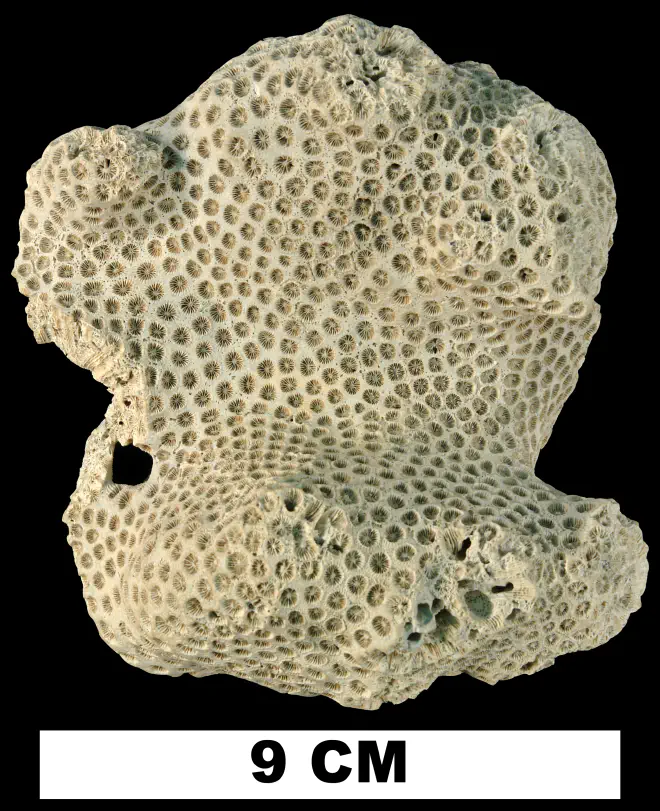
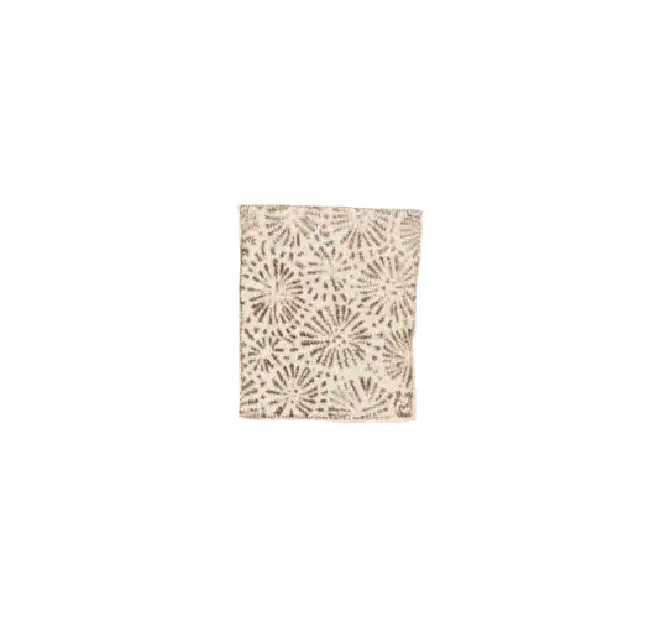
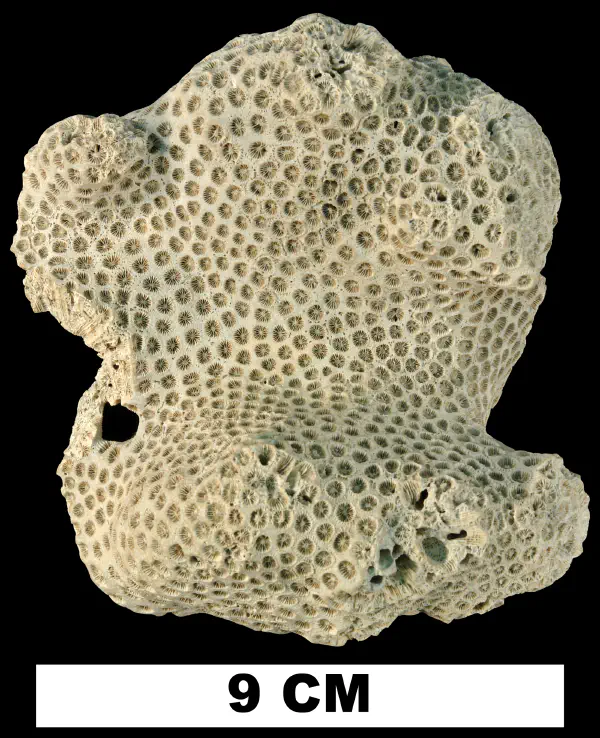
“Convex, erect glomerate and gibbous; polyps scarcely 2 lines broad, with 24 internal lamellae. Corallum light cellular; cells circular, 1.5 lines broad, with the margin annulate as in the pleiades; lamellae very thin; interstices narrow, mostly concave: in a transverse section, stars with 24 rays, septa spongy cellular.
Plate 10, fig. 15, transverse view, natural size.
West Indies. Boston Nat. Hist. Soc.
This species resembles the pleiades, but the stars of the worn surface are larger, and have twenty-four nearly equal rays, the intermediate not being obsolete. The interstices in a vertical section are very delicately cellular and irregularly so, as the rays of the stars seem to be interrupted. In the transverse section, the septum contains generally a single imperfect series of delicate cellules which are seldom angular. In these last characters the species approaches the Caryophyllacea. The cellules of the stars are deep and never decompound. The rays meet in a very narrow fundus which is scarcely convoluted. The specimen affording this description is a subturbinate mass six inches high, four and a half wide at top, with the summit nearly flat.”
To access this description in its original formatting through the Biodiversity Heritage Library, click here.
Online Resources
None at this time.
Media
Images